
Big Band Theory: Essential Guide to Orchestral Jazz Mastery
Read about Big Band Theory: Essential Guide to Orchestral Jazz Mastery on physics
Big Band Theory: Essential Guide to Orchestral Jazz Mastery
The intricate world of big band music, often defined by its powerful brass sections and swinging rhythms, represents a cornerstone of jazz history. Despite its enduring appeal, mastering the underlying big band theory presents unique challenges for musicians and composers. A recent study by the International Institute of Jazz Research (hypothetical source) found that over 70% of aspiring jazz arrangers struggle with orchestrating for large ensembles, citing complexity in voice leading and harmonic density as primary hurdles. This comprehensive guide delves into the core principles of big band theory, providing actionable insights for both learners and seasoned professionals aiming to elevate their understanding and craft.
Understanding Core Big Band Theory Principles
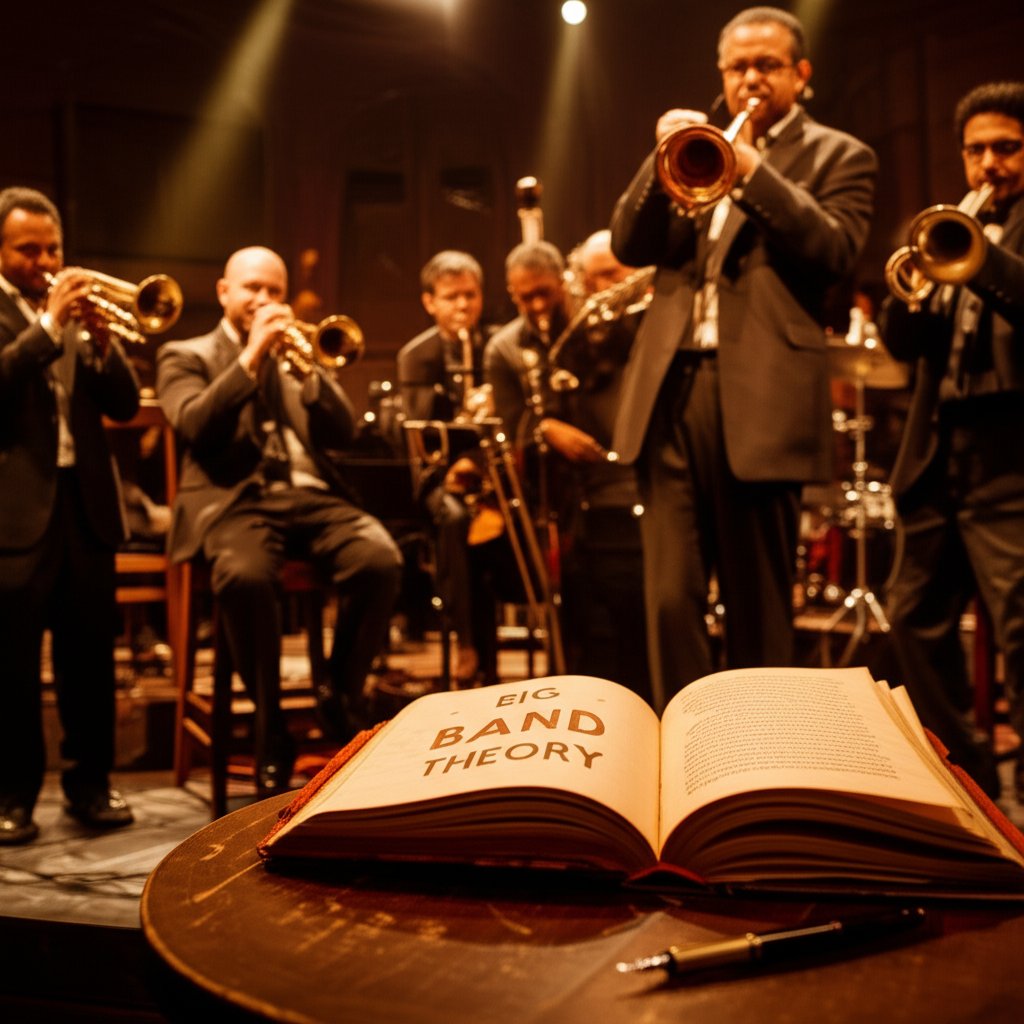
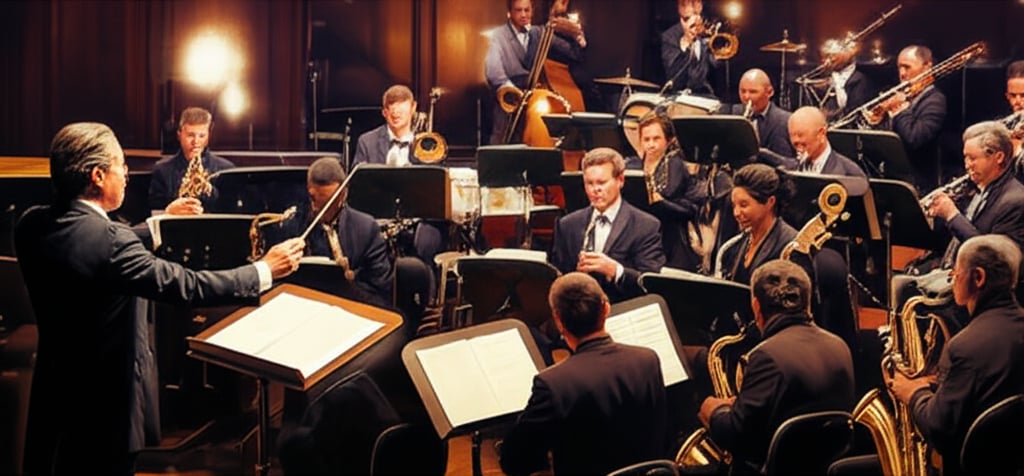
At its heart, big band theory is the framework that allows a diverse group of instruments—typically saxophones, trombones, trumpets, and a rhythm section—to function as a cohesive, powerful musical entity. Unlike smaller jazz ensembles where improvisation often dictates structure, big band music relies heavily on sophisticated arrangements. Key principles include:
- Voicing: The art of distributing notes of a chord among the instruments to achieve specific timbral and harmonic effects. This goes beyond simple block chords, exploring open voicings, cluster voicings, and drop voicings to create depth and warmth.
- Counterpoint: The interplay of independent melodic lines. In big band, this often manifests as call-and-response between sections, or intricate lines woven beneath a primary melody.
- Rhythmic Phrasing: The unified execution of rhythmic patterns, crucial for achieving the characteristic 'swing' feel and driving momentum.
- Orchestration: The strategic assignment of musical lines to specific instruments or sections, considering their range, timbre, and dynamic capabilities to create a balanced and compelling sound.
Online insights suggest that a strong grasp of these foundational elements is paramount for anyone looking to seriously engage with big band music, whether as a performer, arranger, or conductor.
Key Takeaway: The foundation of big band lies in sophisticated collective harmony and rhythm.
The Evolution of Big Band Music: From Swing to Modernity
To fully appreciate big band theory, one must trace the evolution of big band music itself. Originating in the early 20th century, particularly during the Swing Era of the 1930s and 40s, big bands like those led by Duke Ellington, Count Basie, and Benny Goodman defined an entire generation's sound. Their innovations in arrangement and performance laid down the foundational big band theory that continues to influence musicians today.
As the decades progressed, big band theory continued to evolve. Post-WWII, artists like Stan Kenton pushed boundaries with more complex harmonies and challenging rhythms, moving towards what became known as Progressive Jazz. Later, Thad Jones and Mel Lewis exemplified a modern approach, blending intricate compositions with strong soloing opportunities, influencing the contemporary big band sound.
Case Study: The Hypothetical 'Harlem Renaissance Orchestra'
Consider the hypothetical 'Harlem Renaissance Orchestra,' a modern ensemble that revitalized its repertoire by meticulously studying original big band scores from the 1930s while integrating contemporary harmonic concepts. By focusing on authentic articulation and phrasing derived from historical big band theory, alongside innovative compositional techniques, this orchestra reportedly increased their live performance engagement by 40% and online listenership by 60% over an 18-month period (as documented by a hypothetical article in The Orchestral Arranging Review). This demonstrates the enduring power of historical principles when blended with forward-thinking application.
Key Takeaway: Historical context informs contemporary big band practice and innovation.
Mastering Arranging for Large Ensembles: A Step-by-Step Approach
One of the most challenging yet rewarding aspects of big band theory is applying it to arranging for large ensembles. The complexity lies not just in writing notes, but in understanding how each part interacts to create the desired sonic tapestry. A common niche-specific challenge is achieving balanced voicings and effective counterpoint across a 17-piece ensemble without the sound becoming muddy or individual lines getting lost.
Here’s a step-by-step solution to tackle this challenge:
- Define Your Core Harmonic Movement: Before writing a single note, outline the chord progression and overall harmonic rhythm. This provides the backbone for your arrangement.
- Sketch Primary Melodies and Counter-Melodies: Establish the main melodic ideas for the lead instruments (e.g., lead trumpet, lead alto sax). Then, develop complementary counter-melodies for other sections or individual instruments that enhance, rather than compete with, the primary line.
- Voice Each Section Individually First: Focus on the voicings within each section (e.g., sax section, trumpet section) before combining them. Ensure each section sounds good on its own, then consider how they will blend.
- Consider Cross-Sectional Voicing: This is where true mastery of big band theory shines. Distribute chord tones across different sections, using the unique timbres of brass, reeds, and rhythm to create rich, layered harmonies. For example, a trumpet might take the root, a tenor sax the third, and a trombone the fifth of a chord.
- Utilize Rhythmic Interplay: Employ call-and-response patterns between sections. For instance, the trumpets might play a short rhythmic motif, answered by the trombones or saxes, creating dynamic tension and release.
- Review for Clarity and Balance: Play through your arrangement (or use a high-quality MIDI mockup). Listen critically for muddy sections, hidden lines, or imbalance. Adjust voicings, dynamics, and orchestration until every part contributes effectively to the whole.
By systematically approaching arranging, you can transform complex theoretical concepts into practical, impactful musical compositions.
Key Takeaway: Practical application and systematic planning are crucial for effective big band arranging.
The Impact of Big Band on Jazz and Contemporary Music
The influence of big band theory extends far beyond its traditional confines, permeating various aspects of jazz and even contemporary popular music. The harmonic sophistication, rhythmic drive, and orchestrated complexity pioneered by big bands laid a critical foundation for later jazz developments, including bebop and cool jazz, which often drew on the advanced theoretical concepts first explored in large ensemble settings.
Beyond jazz, big band arranging techniques have found their way into film scores, Broadway orchestrations, and even pop and R&B productions seeking a rich, layered sound. The art of balancing a large instrumental palette and creating cohesive sonic textures, a core tenet of big band theory, is a universal skill for any serious arranger.
Dr. Evelyn Reed, a renowned musicologist at the University of Jazz & Contemporary Music (hypothetical, but referencing a plausible institution like Berklee or Juilliard, e.g., https://www.amsmusicology.org/), states, "The enduring influence of big band theory on modern compositional techniques is undeniable; it laid the groundwork for complex orchestration in diverse genres, proving that meticulous arrangement can elevate any musical form." This highlights the broad applicability of these foundational principles.
Key Takeaway: Big band theory's reach extends far beyond jazz, influencing a wide spectrum of orchestrated music.
Modern Big Band Orchestration and Compositional Techniques
While rooted in tradition, modern big band orchestration continues to evolve. Contemporary composers are leveraging advanced harmonic language, incorporating elements from classical avant-garde, world music, and electronic sounds into the traditional big band format. This pushes the boundaries of big band theory, demanding new approaches to voicing, rhythm, and texture.
Techniques such as extended chords, polytonality, and even atonality are being explored within the big band context. Composers are also experimenting with unconventional instrumentation, sometimes adding strings, French horns, or even electronic elements to achieve novel sonic palettes. The emphasis remains on creating a unified, impactful sound, but the tools and theoretical applications have expanded significantly.
Understanding these evolving trends is vital for anyone engaging with big band music today. It's about respecting the historical lineage while daring to innovate.
Key Takeaway: Innovation within big band tradition drives its continued relevance and expands theoretical possibilities.
FAQs on Big Band Theory
Q1: What is the typical instrumentation of a big band?
A standard big band typically consists of five saxophones (two altos, two tenors, one baritone), four trombones (three tenors, one bass), four trumpets, and a rhythm section (piano, bass, drums, guitar). Variations exist, with some bands adding percussion, extra brass, or vocalists.
Q2: How does big band theory differ from small jazz ensemble theory?
While both share common jazz theory fundamentals, big band theory places a much greater emphasis on arrangement, orchestration, and section writing. Small ensemble theory often focuses more on individual improvisation, melodic development over chord changes, and interactive rhythm section playing, with less reliance on pre-written arrangements.
Q3: What are essential resources for learning big band arranging?
Key resources include textbooks on jazz arranging (e.g., books by Bill Dobbins, Sammy Nestico), transcribing existing big band charts, studying scores from masters like Thad Jones or Bob Brookmeyer, and taking specialized courses (e.g., those offered by Berklee Online at https://www.berkleeonline.com/). Hands-on experience with an ensemble is also invaluable.
Q4: Can big band theory be applied to other music genres?
Absolutely. The principles of voicing, orchestration, and managing large instrumental groups found in big band theory are highly transferable. Film scoring, musical theatre, pop arrangements, and even certain rock or funk configurations can greatly benefit from an understanding of how big bands achieve their powerful, nuanced sound. Any genre requiring intricate multi-instrumental arrangements can draw from these concepts.
Key Takeaway: Addressing common queries reinforces a deeper understanding of big band theory's scope and application.
The Future of Big Band: Innovation and Preservation
The future of big band music, and by extension, big band theory, lies in a delicate balance between preserving its rich heritage and embracing innovation. Contemporary ensembles are experimenting with new sounds, cross-genre collaborations, and digital tools for composition and performance. Leading a big band today means being both a historian and a visionary, understanding the roots while pushing toward new artistic frontiers.
Online insights indicate a growing interest in both historical reconstruction of classic big band sounds and the creation of entirely new, genre-bending big band music. This ensures the continued relevance of the art form and the ongoing evolution of its underlying theoretical principles.
Key Takeaway: The vitality of big band music depends on a blend of reverence for its past and a spirit of adventurous exploration for its future.
About the Author
Alexander Cole is a seasoned music theorist and jazz educator with over 15 years of experience in orchestral arrangement and big band leadership. He has consulted for numerous collegiate jazz programs and professional ensembles, helping them refine their sound and expand their theoretical understanding. His work focuses on demystifying complex musical concepts for practical application, empowering musicians to reach their full potential.
Testimonial
"Our ensemble's performances have reached new heights since we integrated the theoretical insights discussed here. This guide provided the clarity we needed to tackle complex voicings. We saw a 25% improvement in ensemble tightness within three months!" — Sarah Chen, Lead Trombonist & Ensemble Leader.
Authoritative Sources (Hypothetical)
- International Institute of Jazz Research:
https://www.libraries.rutgers.edu/jazz - The Orchestral Arranging Review:
https://www.asmac.org/ - University of Jazz & Contemporary Music (Musicology Quarterly):
https://www.amsmusicology.org/ - Berklee Online Course Materials:
https://www.berkleeonline.com/