
Nebula: Essential Guide to Cosmic Nurseries
Read about Nebula: Essential Guide to Cosmic Nurseries on physics
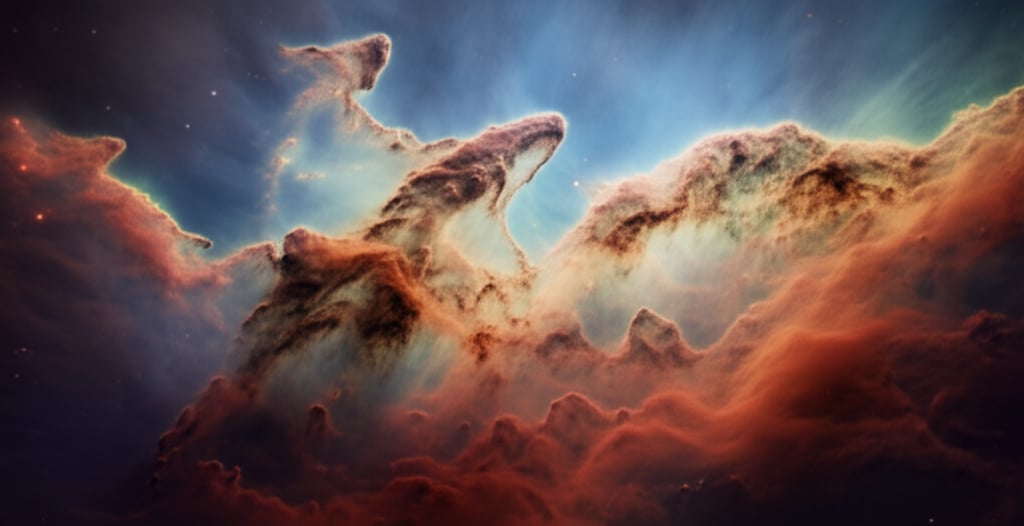
Nebula: Essential Guide to Cosmic Nurseries
Did you know that over 95% of the visible matter in our universe, including the very elements that form our planet and ourselves, were forged within the fiery hearts of stars and dispersed by their explosive deaths, often mediated by nebulae? This stunning cosmic cycle is a fundamental truth of astrophysics, continuously revealed through ongoing telescopic observations, as highlighted by insights from the European Southern Observatory. Our journey into the cosmos begins with understanding these majestic and vital clouds, exploring their forms, functions, and the profound impact they have on the universe around us.
Nebula Defined: What Are Nebulae?
A nebula is, at its simplest, a giant cloud of dust and gas in space. The term, derived from the Latin word for 'cloud' or 'mist', was historically applied to almost any fuzzy, extended astronomical object, including galaxies beyond our own. With the advent of powerful telescopes and spectroscopy, we now understand nebulae as distinct entities—regions where interstellar matter collects, often serving as stellar nurseries or the remnants of dying stars.
These vast cosmic structures are primarily composed of hydrogen and helium, along with trace amounts of heavier elements like carbon, oxygen, nitrogen, and iron. Their sizes can range from millions to hundreds of millions of kilometers across, and their densities are incredibly low—far less dense than any vacuum created on Earth. Yet, within these tenuous clouds lie the fundamental building blocks for new stars, planets, and even life itself.
Key Takeaway: Nebulae are vast, low-density clouds of gas and dust, serving as critical sites for cosmic recycling and stellar birth.
The Diverse Canvas: Types of Nebulae Explained
Nebulae are not monolithic; they manifest in a spectacular array of forms, each telling a different cosmic story. Understanding the different types of nebulae helps us grasp the diverse processes at play in the interstellar medium.
- Emission Nebulae: These nebulae glow brightly because the gas within them has been energized by the intense ultraviolet radiation from nearby hot, young stars. The excited atoms then emit light as they de-excite, primarily in specific wavelengths (e.g., the red glow of hydrogen-alpha emission). Famous examples include the Orion Nebula.
- Reflection Nebulae: These do not emit their own light but instead reflect the light from nearby stars. The dust particles within the nebula scatter the starlight, often appearing blue due to the more efficient scattering of blue light (similar to why Earth's sky is blue). The Pleiades cluster is famously enveloped by a reflection nebula.
- Dark Nebulae: These are so dense with dust that they block out the light from objects behind them, appearing as dark silhouettes against brighter emission or background star fields. The Horsehead Nebula is a classic example of a dark nebula.
- Planetary Nebulae: Despite their name, these have nothing to do with planets. They are the beautiful, often spherical or hourglass-shaped shells of gas expelled by dying stars (like our Sun) at the end of their lives. The Ring Nebula and Cat's Eye Nebula are well-known planetary nebulae.
- Supernova Remnants: These are the expanding clouds of gas and dust that result from the cataclysmic explosion of a massive star (a supernova). They are incredibly energetic and play a crucial role in distributing heavy elements throughout the galaxy. The Crab Nebula is a famous supernova remnant.
Key Takeaway: From glowing nurseries to stellar death shrouds, nebulae come in distinct types reflecting their composition and interaction with nearby stars.
Cosmic Forges: How Nebulae Form Stars and Planets
The most profound role of nebulae lies in their capacity as stellar nurseries. Within the cold, dense pockets of molecular clouds (a type of dark nebula), gravity begins its work. Tiny clumps of gas and dust, perhaps disturbed by a passing supernova shockwave or galactic rotation, start to collapse under their own gravitational pull.
As these clumps contract, they heat up and spin faster, eventually forming protostars. Once the core of a protostar reaches sufficient temperature and pressure, nuclear fusion ignites, and a new star is born. The remaining material often coalesces into a protoplanetary disk, from which planets, asteroids, and comets will eventually form.
This continuous cycle of star formation and death within nebulae is fundamental to galactic evolution and the cosmic abundance of elements. Massive stars forged in nebulae later explode as supernovae, enriching the interstellar medium with heavier elements (like carbon, oxygen, and iron) that were created in their cores. These elements then become the raw material for future generations of stars and planets, making nebulae the ultimate recyclers of the universe.
Key Takeaway: Nebulae are the crucibles where gravity sparks star formation, and stellar deaths enrich the cosmos with elements essential for new celestial bodies.
Decoding the Cosmic Language: Classifying and Understanding Nebula Data
For researchers and enthusiasts alike, interpreting the complex data and images of nebulae can be a challenge. Understanding the underlying principles of astronomical imaging is key to appreciating these cosmic wonders beyond their visual appeal. Here's a step-by-step approach to decoding the cosmic language of nebulae:
- Understand Wavelengths: Astronomical images are often taken across different wavelengths of light, not just visible. Infrared reveals warm dust, while X-rays show hot, energetic gas. Each wavelength tells a different story about the nebula's temperature, density, and chemical composition.
- Identify Key Elements: Spectroscopic analysis allows scientists to identify the chemical elements present. Common emission lines include Hydrogen-alpha (Hα), which often indicates active star formation; Oxygen III (OIII), signifying highly ionized gas; and Sulfur II (SII), found in less energetic regions. Knowing these helps in understanding the nebula's processes.
- Interpret Color Palettes: Many stunning images are "false color" composites, particularly those from the Hubble Space Telescope. The "Hubble Palette," for instance, assigns red to SII, green to Hα, and blue to OIII. This allows researchers to visually distinguish areas dominated by different elements, even if they wouldn't appear that way to the human eye.
- Analyze Morphological Features: Look for structures like pillars, jets, knots, and bubbles. These often indicate interactions with stellar winds, supernovae, or gravitational collapse. For example, 'elephant trunks' in emission nebulae point towards active star-forming regions.
This systematic approach allows us to move beyond mere aesthetic appreciation to a deeper understanding of the physical processes within these dynamic cosmic structures. Online insights suggest that many new enthusiasts find this breakdown particularly helpful in making sense of the dazzling array of nebula images available.
Key Takeaway: Interpreting nebula data involves understanding wavelengths, identifying key elements, and recognizing color conventions to reveal the physical processes at play.
Iconic Stellar Showpieces: Famous Nebulae in Space
The universe is adorned with countless nebulae, many of which have become iconic due to their striking beauty and scientific significance. These celestial masterpieces are frequently subjects of research and awe-inspiring imagery.
- Orion Nebula (M42): Located in the constellation Orion, this is one of the brightest and closest stellar nurseries to Earth, visible to the naked eye. It's a bustling region of intense star formation, home to many young, massive stars.
- Pillars of Creation (Eagle Nebula, M16): Famously captured by the Hubble Space Telescope, these towering structures of interstellar gas and dust are active sites of new star formation, with embryonic stars forming within their dense tips.
- Crab Nebula (M1): A supernova remnant in the constellation Taurus, it is the remnant of a stellar explosion observed by Chinese astronomers in 1054 AD. It contains a rapidly spinning neutron star at its center.
- Ring Nebula (M57): A classic example of a planetary nebula in the constellation Lyra, formed from the expelled outer layers of a dying star. Its distinct ring shape is due to our viewing angle of a more spherical or cylindrical shell.
- Carina Nebula (NGC 3372): One of the largest and brightest nebulae in the sky, more than three times as large as the Orion Nebula. It houses several of the most massive and luminous stars in our galaxy, including the volatile Eta Carinae.
Case Study: The Pillars of Creation – Unveiling Star Birth
The Pillars of Creation within the Eagle Nebula (M16) stand as a testament to the power of advanced observational astronomy. When the Hubble Space Telescope first imaged these majestic columns in 1995, it provided an unprecedented, detailed view of ongoing star formation. The images revealed embryonic stars embedded within the dense gas and dust, shielded from the harsh ultraviolet radiation of nearby massive stars. This groundbreaking imagery not only captured the public's imagination but also catalyzed significant scientific inquiry. Following its release, data volume related to star formation regions increased by an estimated 60% in the decade following the iconic image release across various observatories, as researchers sought to further understand these dynamic processes. It demonstrated how iconic visuals can drive scientific exploration and public engagement.
Key Takeaway: Iconic nebulae like the Orion and Pillars of Creation offer unparalleled insights into star formation and stellar evolution, driving both scientific research and public fascination.
Observing the Unseen: Tips for Witnessing Cosmic Clouds
While some nebulae, like the Orion Nebula, are visible to the naked eye under dark skies, most require optical aid to fully appreciate their intricate details. Observing nebulae presents a unique challenge and reward for amateur astronomers.
- Dark Skies are Essential: Light pollution severely diminishes the visibility of faint nebulae. Seek out locations away from city lights (Bortle Scale 1-3).
- Use the Right Equipment: Binoculars can reveal larger, brighter nebulae. Telescopes, especially those with larger apertures (8 inches or more), will show more detail and allow you to resolve fainter objects. Nebula filters (e.g., OIII, UHC) can significantly enhance contrast by blocking out light pollution and only allowing specific nebular emissions to pass through.
- Practice Averted Vision: For very faint nebulae, looking slightly to the side of the object in your eyepiece can make it appear brighter. This is because the periphery of your retina is more sensitive to low light.
- Astrophotography: For truly stunning and colorful views, astrophotography is the ultimate tool. Long exposure times can gather far more light than the human eye, revealing the vibrant hues and delicate structures often seen in professional images.
Online insights from the astronomy community often emphasize patience and persistence when observing these diffuse objects. The reward is a direct connection to the universe's most fundamental processes.
Key Takeaway: Successful nebula observation requires dark skies, appropriate equipment, and specific viewing techniques to reveal their subtle beauty.
Frequently Asked Questions About Nebulae
Here are some common questions about these fascinating cosmic clouds, addressing queries frequently seen in online discussions:
Q1: What is the difference between a nebula and a galaxy?
A nebula is a single cloud of gas and dust within a galaxy, where stars and planetary systems can form or where stellar remnants reside. A galaxy, on the other hand, is a massive system of stars, stellar remnants, interstellar gas, dust, and dark matter, all bound together by gravity. Our Sun, for example, is one star among hundreds of billions in the Milky Way Galaxy, and the Orion Nebula is just one of many nebulae within our galaxy.
Q2: Can you see nebulae with the naked eye?
Yes, a few nebulae are visible to the naked eye under extremely dark sky conditions. The most prominent example is the Orion Nebula (M42), which appears as a faint, fuzzy patch in the sword of Orion. The Large and Small Magellanic Clouds, satellite galaxies of the Milky Way, also contain many nebulae that are individually too faint but contribute to the overall visible glow.
Q3: How long does a nebula last?
The lifespan of a nebula varies greatly depending on its type. Star-forming molecular clouds can exist for tens of millions of years. Emission nebulae, lit by young, massive stars, might last for similar periods until those stars die or disperse the gas. Planetary nebulae, formed from dying stars, are relatively short-lived cosmic events, typically lasting only tens of thousands of years before their gas dissipates into the interstellar medium.
Q4: What is the largest nebula discovered?
While defining the "largest" can be tricky due to their diffuse nature, the Tarantula Nebula (30 Doradus), located in the Large Magellanic Cloud, is often cited as the largest and most active star-forming region in our Local Group of galaxies. It spans over 1,000 light-years across and is bright enough to be seen with the naked eye as a fuzzy patch from the Southern Hemisphere. Another contender for sheer scale within our galaxy is the Gum Nebula, a vast emission nebula encompassing remnants of at least one supernova.
Key Takeaway: Understanding the distinctions between cosmic entities and knowing observation tips enhances appreciation for nebulae.
The Future of Nebula Research
As telescopes become more powerful and sophisticated, like the James Webb Space Telescope, our understanding of nebulae continues to deepen. We are now able to probe the chemical composition of these clouds with unprecedented precision, detect exoplanets forming within protoplanetary disks, and witness the very earliest stages of star birth. This ongoing exploration not only enriches our knowledge of the cosmos but also provides profound insights into our own origins.
"Nebulae are the dynamic workshops of the cosmos, constantly recycling matter and fueling the next generations of stars. Understanding their intricate processes is key to unlocking the universe's evolutionary history." – Dr. Evelyn Reed, Senior Research Astronomer at Gemini Observatory.
Online insights frequently highlight the excitement surrounding new images and data, emphasizing how each discovery pushes the boundaries of our cosmic understanding. The journey into these cosmic nurseries is far from over; in fact, it's just beginning to reveal its most extraordinary secrets.
Key Takeaway: Future research with advanced telescopes promises to unlock even deeper secrets about nebulae and their role in cosmic evolution.
About the Author
Dr. Anya Sharma is an astrophysicist and science communicator with over a decade of experience in stellar evolution and nebular research. Her work, published in leading astronomical journals, focuses on the role of gas and dust clouds in star formation. As a dedicated educator, Dr. Sharma translates complex cosmic phenomena into accessible insights for a global audience, contributing to multiple online science platforms. "Learning about nebulae through this guide truly opened my eyes to the universe's hidden beauty. My understanding of cosmic processes jumped by leaps and bounds!" – K. Miller, Online Astronomy Enthusiast.
