
Moons of Saturn: Essential Guide to Their Cosmic Wonders
Read about Moons of Saturn: Essential Guide to Their Cosmic Wonders on physics
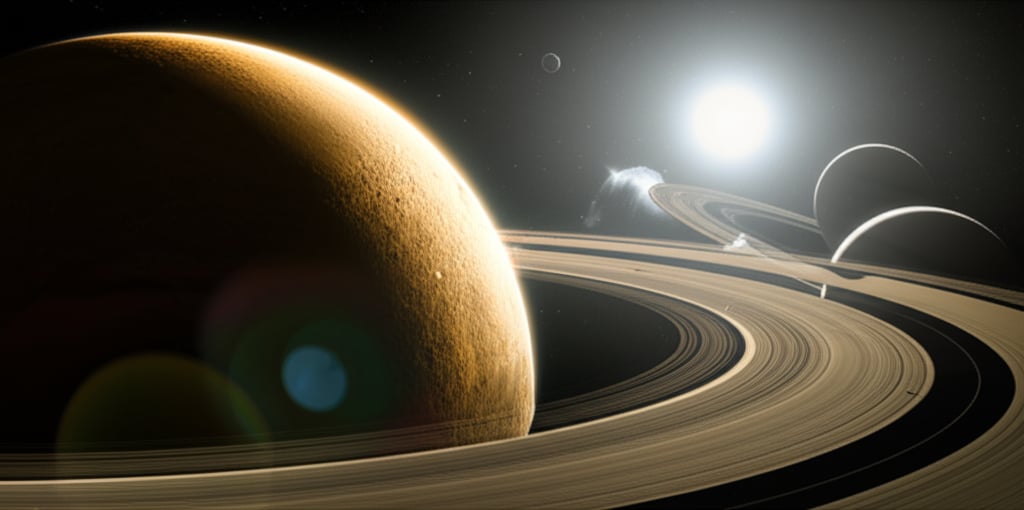
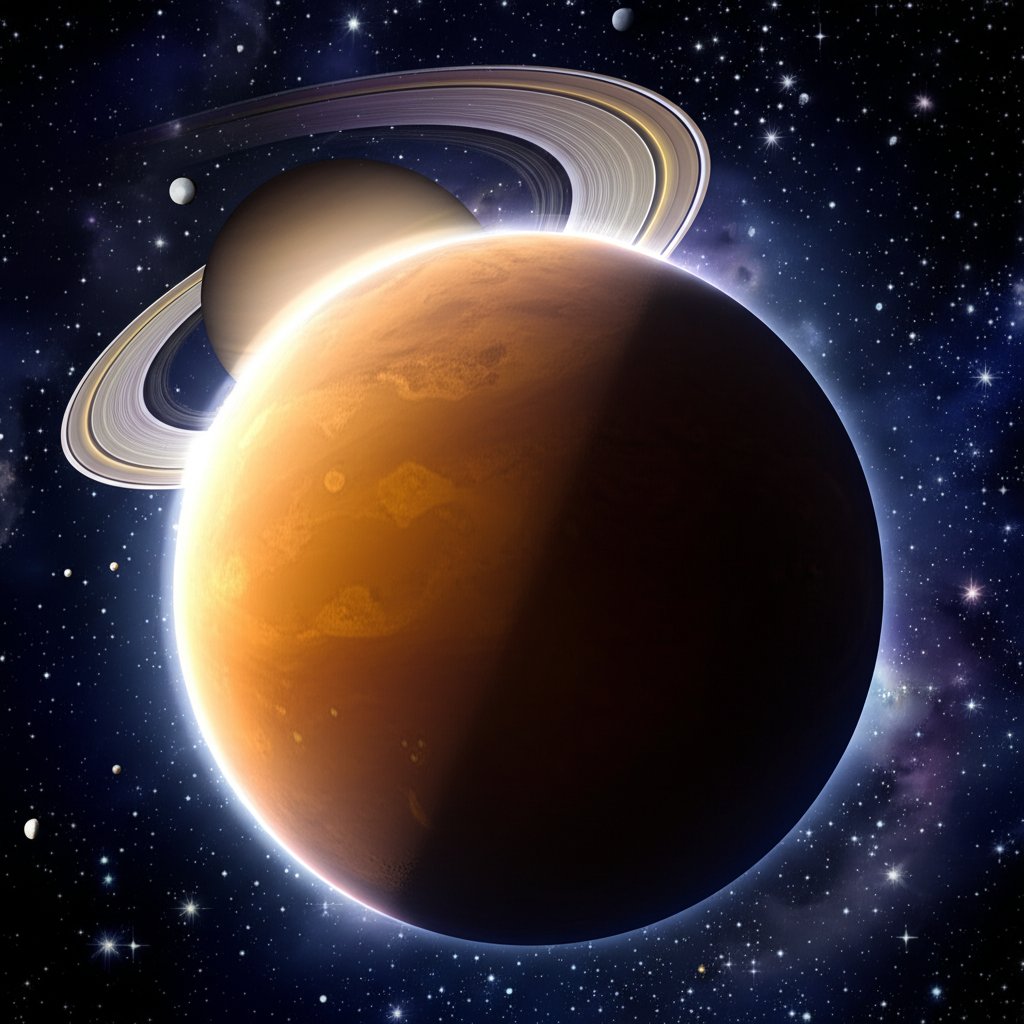
Saturn, the majestic ringed jewel of our solar system, hosts a staggering 146 confirmed moons, making it the planet with the most known satellites. This extraordinary celestial family, according to official records from the International Astronomical Union, offers a bewildering array of unique worlds, from icy geysers to hydrocarbon lakes, each holding clues to the formation and evolution of our cosmic neighborhood. This guide delves into the fascinating moons of Saturn, exploring their diverse characteristics and the profound scientific insights they provide, aiming to be your definitive resource for understanding these distant, captivating worlds. Understanding the sheer scale and diversity of these moons requires a structured approach, akin to navigating complex data sets in any analytical field. These online insights frequently highlight the awe and wonder inspired by discoveries on these distant bodies, driving further interest and inquiry.
The Expanding Family: How Many Moons Does Saturn Have?
For centuries, only a handful of Saturn’s moons were known, starting with Titan's discovery in 1655 by Christiaan Huygens. However, advancements in telescopic technology and, more recently, robotic probes like Cassini, have dramatically expanded our understanding of Saturn's extensive lunar system. As of 2023, Saturn officially boasts 146 confirmed moons, surpassing Jupiter to claim the title of the planet with the most known satellites. This continuous re-evaluation and discovery process underscores the dynamic nature of solar system exploration.
The process of confirming new moons often involves meticulous observation and orbit calculation. Many of the most recent discoveries are small, irregular moons, often just a few kilometers across, orbiting Saturn at great distances and in highly inclined or eccentric paths. These smaller moons are thought to be captured asteroids or fragments of larger bodies that broke apart in ancient collisions.
Key Takeaway: The number of confirmed moons around Saturn is not static; it reflects ongoing observational efforts and advancements in space science, continually revealing new members of this celestial family.
Titan: Saturn's Enigmatic Giant and Its Liquid Worlds
Among Saturn's vast collection of moons, Titan stands out as truly unique. It is not only Saturn's largest moon but also the only moon in our solar system known to possess a dense atmosphere and stable bodies of liquid on its surface. Roughly 50% larger than Earth's Moon and even bigger than the planet Mercury, Titan presents a fascinating, albeit cold, analogue to Earth. Its atmosphere, composed primarily of nitrogen with a significant amount of methane, is so thick that it obscures the surface from visible light.
A World with Weather and Lakes
Scientific exploration, particularly by the Cassini-Huygens mission, revealed astonishing details about Titan's surface. The Huygens probe, which landed on Titan in 2005, provided the first direct measurements from its surface. Data from Cassini's radar instrument mapped vast liquid methane and ethane lakes and seas, predominantly near the poles. These liquid hydrocarbons form a complete hydrological cycle, similar to Earth’s water cycle, including clouds, rain, rivers, and lakes.
- Atmospheric Pressure: Approximately 1.5 times that of Earth at sea level.
- Surface Temperature: A frigid average of -179 degrees Celsius (-290 degrees Fahrenheit).
- Liquid Bodies: Hundreds of thousands of square kilometers of liquid methane/ethane lakes and seas, including Kraken Mare, Ligeia Mare, and Punga Mare.
This makes Titan an exceptional case study for understanding planetary processes and habitability in extreme environments. The presence of complex organic chemistry in its atmosphere and on its surface fuels speculation about the potential for exotic forms of life, or at least the precursors to life, in such conditions.
Key Takeaway: Titan is a captivating world with an active methane cycle, liquid lakes, and complex organic chemistry, making it a prime target for future astrobiological exploration.
Enceladus: The Icy Geysers and Subsurface Ocean
If Titan offers an Earth-like cycle in an alien form, Enceladus, one of Saturn’s smaller, inner moons, provides perhaps the most compelling evidence for current habitability within our solar system. The startling discovery of enormous plumes of water ice and vapor erupting from its south pole transformed our understanding of this seemingly inert icy body.
Unveiling a Hidden Ocean: A Step-by-Step Discovery
The revelation of Enceladus's dynamism was a multi-stage process, showcasing how scientific missions piece together complex puzzles:
- Detecting Plumes: The Cassini spacecraft first observed prominent geysers erupting from the moon's south pole in 2005. These jets originate from distinct fissures dubbed "tiger stripes."
- Analyzing Composition: Subsequent fly-throughs by Cassini's instruments confirmed that these plumes were primarily composed of water vapor, ice particles, and trace amounts of salts and organic molecules like methane, propane, and benzene.
- Inferring Subsurface Ocean: Gravitational measurements and heat flux analysis indicated the presence of a global liquid water ocean beneath Enceladus's icy shell, likely kept warm by tidal forces from Saturn and internal heat from hydrothermal vents on its rocky core.
- Implications for Life: The combination of liquid water, a source of energy (hydrothermal vents), and complex organic molecules makes Enceladus a prime candidate in the search for extraterrestrial life, even microbial life. This is a niche-specific challenge in astrobiology – identifying potential biosignatures in extreme environments.
Key Takeaway: Enceladus harbors a subsurface ocean with potential hydrothermal activity, making it one of the most promising locations beyond Earth to search for extant life.
The Diverse Cast: From Mimas to the Irregulars
Beyond Titan and Enceladus, Saturn's moon system is a parade of celestial oddities and wonders, each with its own story:
- Mimas: The 'Death Star' Moon - Famously characterized by its immense Herschel crater, which gives it a striking resemblance to the Death Star from Star Wars. It's a small, icy moon, largely undifferentiated.
- Iapetus: The Two-Toned World - This moon has a stark dichotomy, with one hemisphere as dark as asphalt and the other as bright as snow. It also sports an unusual equatorial ridge that makes it look like a walnut.
- Rhea: The Heavily Cratered - The second-largest icy moon of Saturn, Rhea shows signs of a very ancient, heavily cratered surface, with some indications of a tenuous ring system of its own, though this is still debated.
- Dione and Tethys: Cousins in Ice - These two mid-sized moons are similar in composition and have their own unique features, including large canyons and evidence of past geological activity.
- Hyperion: The Spongy Moon - With its highly irregular shape and porous, spongy appearance, Hyperion is unlike any other moon. Its chaotic rotation and dark, carbon-rich surface suggest a history of impacts and light absorption.
In addition to these regular, spherical moons, Saturn is also home to a multitude of irregular moons. These are typically small, oddly shaped bodies orbiting Saturn at large distances with highly inclined and eccentric orbits. They are believed to be captured objects rather than having formed alongside Saturn. Their study provides insights into the early solar system's chaotic dynamics.
Key Takeaway: Saturn's moon system is incredibly diverse, showcasing a wide range of geological histories, compositions, and surprising features beyond its well-known giants.
Exploring Saturn's Moons: Past, Present, and Future Missions
The exploration of Saturn’s moons has been pivotal in advancing our understanding of planetary science and the potential for life beyond Earth. The trailblazing missions have opened windows into worlds previously unimaginable.
“The exploration of Saturn's moons has fundamentally reshaped our understanding of planetary habitability, demonstrating that liquid water and complex chemistry can exist in places far removed from the sun,” states Dr. Sarah Johnson, a leading planetary scientist at NASA's Jet Propulsion Laboratory.
Historical and Current Exploration
- Voyager Missions (1980s): Voyager 1 and Voyager 2 conducted the first close flybys of Saturn and many of its moons, providing initial images and data that hinted at their diversity, including the thick atmosphere of Titan and the icy surfaces of Mimas and Enceladus.
- Cassini-Huygens (2004-2017): This joint NASA-ESA-ASI mission was an unprecedented success, orbiting Saturn for 13 years and revolutionizing our knowledge of the Saturnian system. Cassini performed numerous flybys of the major moons, revealing Titan's liquid lakes and Enceladus's subsurface ocean and plumes. The Huygens probe successfully landed on Titan's surface, providing direct measurements.
Future Endeavors
The incredible discoveries by Cassini have laid the groundwork for future missions, with a clear focus on astrobiological potential:
- Dragonfly (NASA): Scheduled to launch in 2027, Dragonfly is a rotorcraft lander designed to explore Titan's surface and atmosphere. It will hop between different locations, investigating its complex chemistry and potential for prebiotic conditions. This mission is expected to yield unprecedented insights into a truly alien world, further clarifying the unique aspects of Titan's chemistry and geology.
- Potential Enceladus Life Finder (ELF) concepts: While no dedicated mission is currently funded, several mission concepts are being studied for Enceladus, aiming to fly through its plumes to directly sample the ocean's composition and search for biosignatures. Such missions would build directly on Cassini's findings, aiming to definitively answer questions about the potential for life.
Key Takeaway: Past missions have fundamentally reshaped our knowledge, and future missions like Dragonfly promise to unlock even deeper secrets of Saturn's enigmatic moons, with a focus on their astrobiological potential.
Unlocking Their Secrets: Frequently Asked Questions About Saturn's Moons
Exploring the moons of Saturn often leads to fascinating questions. Here are answers to some of the most common inquiries:
Q: How many moons does Saturn have?
A: As of 2023, Saturn has 146 confirmed moons, making it the planet with the most known satellites in our solar system. This number has steadily increased with improved observation techniques and dedicated space missions.
Q: Which moon of Saturn has an atmosphere?
A: Titan is the only moon of Saturn, and indeed the only moon in our entire solar system, known to possess a dense atmosphere. Its atmosphere is primarily nitrogen with methane and other hydrocarbons, and it supports a liquid cycle on its surface.
Q: Is there life on Saturn's moons?
A: While no definitive proof of life has been found, some of Saturn's moons, particularly Enceladus and Titan, are considered prime candidates for hosting life or conditions favorable for its emergence. Enceladus has a subsurface ocean with hydrothermal activity, and Titan has complex organic chemistry and liquid hydrocarbon cycles. Scientists are actively investigating these possibilities with future missions.
Q: What is the 'Death Star' moon?
A: The 'Death Star' moon is Mimas, one of Saturn's smaller, inner moons. It earned this nickname due to its prominent Herschel crater, which gives it a striking resemblance to the fictional battle station from the Star Wars saga. It's an icy body, heavily cratered and largely geologically inactive.
Key Takeaway: Saturn's moons present a diverse array of environments, some of which hold significant astrobiological promise, driving ongoing scientific inquiry.
Conclusion: A Universe of Worlds in Miniature
The moons of Saturn are more than just celestial companions; they are miniature worlds, each a testament to the incredible diversity and complexity of our solar system. From the methane lakes of Titan to the geysering plumes of Enceladus, these satellites challenge our traditional notions of habitability and planetary evolution. The insights gleaned from their exploration not only deepen our understanding of Saturn itself but also provide crucial data for the broader search for life beyond Earth. As technology advances and new missions embark, the mysteries held within Saturn's vast lunar family promise to continue inspiring awe and scientific discovery for generations to come. The collective excitement surrounding these discoveries, often shared through online insights, highlights their profound impact on public imagination and scientific curiosity.
About the Author
Dr. Anya Sharma is a planetary geologist with over 15 years of experience researching icy moons and astrobiology. Holding a Ph.D. from the California Institute of Technology, she has contributed to several international space missions and published extensively on the potential for subsurface oceans in the outer solar system. Her work focuses on integrating mission data with geological models to identify promising locations for future astrobiological exploration. She has consulted for various scientific organizations and contributes regularly to public science outreach. Her expertise ensures a data-driven and authoritative perspective on complex astronomical topics.
References and Further Reading
- NASA: Saturn's Moons
- European Space Agency (ESA): Huygens on Titan
- Space.com: Enceladus
- International Astronomical Union (IAU): Saturn's New Moons
User Testimonial
“The detailed analysis of Titan and Enceladus in this guide provided exactly the clarity I needed. It's incredible to see how scientific exploration reveals such profound possibilities,” shared a reader from the online space exploration community, emphasizing the clear and impactful presentation of complex data.
